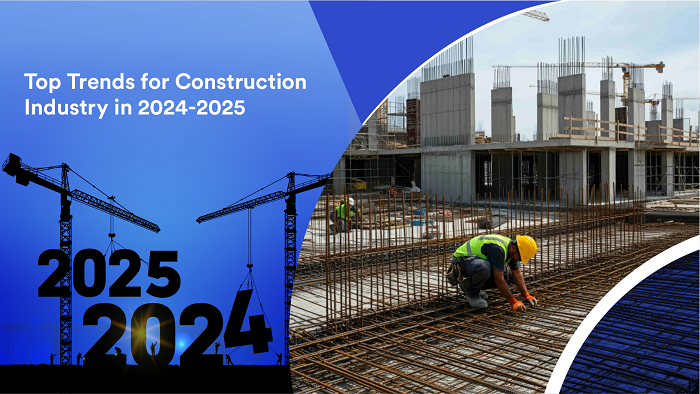
The construction industry is evolving with advancements in technology, changing regulations, and a heightened focus on sustainability.
The global cement market is undergoing rapid transformation, driven by new demands for infrastructure, energy-efficient buildings, and eco-friendly materials.
The $7592 billion market in 2024 is bound to grow at a CAGR of 4.9% and reach $9180.1 billion.
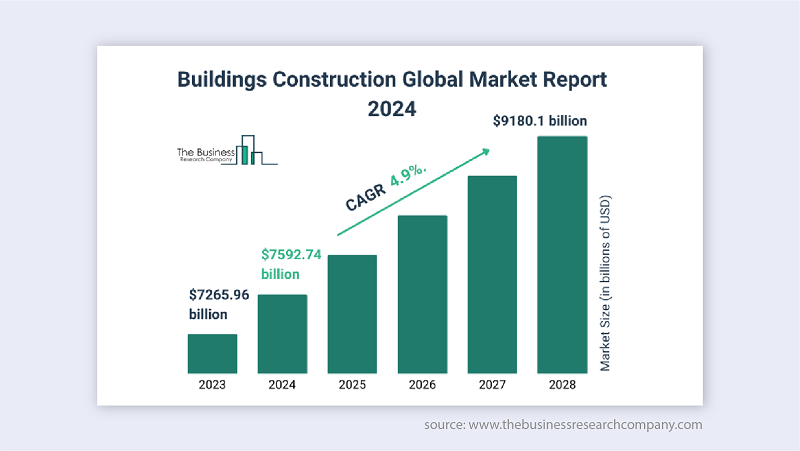
This surge is fueled by economic recovery, increased infrastructure investment, and the urgent need for affordable housing, especially in urbanizing regions like Asia-Pacific and Africa.
These fast-developing regions have a high demand for innovative construction methods, like ultra-high-performance concrete (UHPC) and prefabricated construction, which streamline project timelines and enhance building durability.
In this post, we’ll explore the modern trends in the construction industry that are all backed by the cement industry.
As the demand for construction grows due to economic fluctuations, population growth, and urbanization, a top cement plant manufacturing company should always be prepared to meet the surge.
Keeping a tab on emerging trends helps predict the future of construction, where businesses can position themselves for long-term success.
Green and Sustainable Building Practices
Sustainability is more important than ever in the construction world. With tougher environmental rules popping up across the globe, cement makers, in particular, are being pushed to find better ways to reduce pollution. It’s crucial, especially since cement production alone contributes around 8% of all global carbon emissions.
To tackle this problem, companies are experimenting with alternative fuels and turning to newer technologies, like Carbon Capture and Storage (CCS), to help trap and lower the carbon released during the cement-making process.
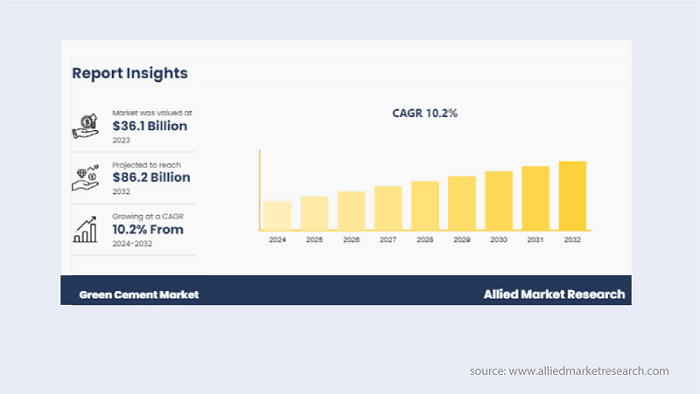
According to Allied Market Research, the demand for green cement is on the rise. The market is expected to jump from $36.1 billion in 2023 to a massive $86.2 billion by 2032. This growth shows how many people are looking for cleaner, more eco-friendly solutions in construction.
All these have led to a move toward eco-friendly building practices. As discussed below, cement producers now play a crucial role in reducing emissions by adopting more sustainable methods.
Tackling Sustainability Challenges
Cement producers are taking action to address carbon emissions by finding ways to cut CO2 output. It includes alternative fuels like biomass and industrial waste.
Many are also turning to tech solutions like Carbon Capture and Storage (CCS) to help reduce the environmental impact of their production processes.
Shifting Toward Eco-Friendly Materials
Future trends will see construction businesses lean toward using green concrete and other low-carbon alternatives. These are bound to gain popularity not just for big infrastructure builds but also for residential projects as they become the go-to choice for sustainable construction.
Energy-Efficient Building Demand
The push for energy-efficient buildings is growing fast, and it’s driving developers to rethink their material choices. Meeting energy-saving goals requires opting for green cement, which helps make buildings more eco-friendly in terms of how they’re built and how they perform long-term.
Government Support and Incentives
Governments have a massive role to play in promoting sustainability. Many are offering incentives to businesses that adopt greener construction practices. This push towards encouraging the adoption of eco-friendly methods has cement makers investing in sustainable technologies, helping them stay competitive and keep up with new regulations.
Smart Construction Technology
The rise of smart construction technology is changing how buildings are put together. More and more, companies are using tools like AI and automation to make construction faster, cheaper, and more efficient. These tools help companies manage projects better and reduce mistakes, which means they can get more done in less time.
Experts predict that by 2025, AI in the construction industry will be worth around $4.51 billion. This shows how big of an impact it’s having. AI is helping construction teams organize their work better, ensuring projects stay on track from start to finish.
Another critical technology is Building Information Modeling (BIM). This tool lets teams create detailed digital plans of buildings. According to a Deloitte study, using BIM can shorten the time it takes to complete a project by up to 20% and lower costs by about 15%.
You need a clear digital plan and architects, engineers, and builders who work together more smoothly. This will prevent problems and keep everyone on the same page.
Automation, AI, and robotics
These technologies are changing construction sites by automating redundant tasks, improving precision, and enhancing overall safety. AI-powered project management tools can streamline complex workflows, allowing real-time adjustments and predictive risk assessments.
3D printing
It's an innovative technology that redefines the construction process by allowing rapid construction of structures using cement-based materials. 3D printing not only fastens construction timelines but also minimizes material waste and labor costs, making it a noteworthy trend in the construction industry.
BIM and digital twins
The integration of BIM and digital twin technologies enables the creation of real-time digital representations of construction projects. It provides better project management, data accuracy, and enhanced decision-making throughout the project lifecycle.
Digital supply chain innovations
Digital tools help improve efficiency throughout the construction supply chain. They let you track materials, reduce delays, and drive cost-effectiveness. Such innovations help construction companies reduce bottlenecks and stay on track with project timelines.
Modular and Prefabricated Construction
More building projects are pivoting to modular and prefabricated construction, where everything is not built on-site. Instead, the project parts are made in a factory and then transported for assembly.
It's a modern-day construction method that saves both time and money.
A recent report shows the modular construction market could grow at a CAGR of 6.1% between 2021 and 2028, reaching $114 billion.
The two key factors driving its demand are reduced costs and faster construction.
Cutting Time and Costs: Making parts off-site would mean construction projects are completed faster than usual, with workers spending less time on site. This would reduce the need for an entire crew, which would lower not only labor costs but also material costs since they are used more efficiently, resulting in less waste.
Less Maintenance: Building components in a controlled environment results in higher quality, fewer errors or defects, and reduced need for future repairs or maintenance, resulting in long-term savings.
Real-World Examples of Modular Construction
Modular methods have been used in various projects, from homes to hotels.
For instance, a high-rise Marriot hotel in New York City used modular construction to speed up its construction time.
Instead of sticking to traditional methods, they opted for cement plant upgrading and modernization solutions to create premade sections of the hotel off-site and then assemble them on location, saving months in the construction schedule.
Another great example is how healthcare facilities used modular techniques to build hospitals quickly during the pandemic.
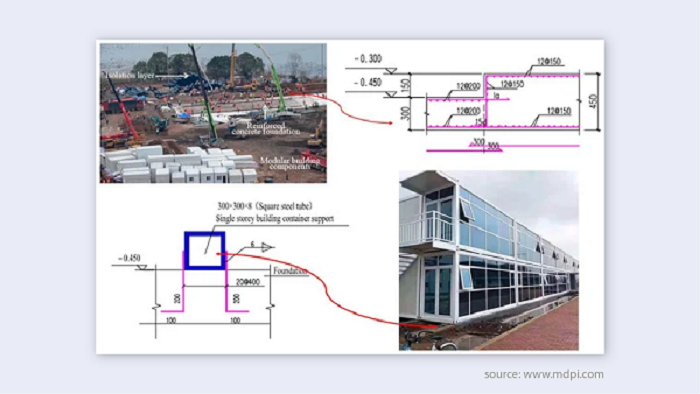
Prefabricated sections were delivered to the site and assembled rapidly to meet urgent healthcare needs.
What’s Next for Modular Construction in the Coming Years?
We can expect to see modular construction grow even more in the coming couple of years due to the following reasons:
- Labor Shortages: With fewer workers available in the construction industry, prefabrication speeds up the process, helping solve the problem.
- Environmental Benefits: Modular construction creates less waste and requires fewer trips to and from the site. It makes them more environment-friendly, aligning with current sustainability goals.
- Urban Growth: Cities are expanding, and this demands quicker and more affordable housing solutions. Modular buildings can meet this meteoric demand by offering faster construction timelines without compromising quality.
Rising Costs and Supply Chain Challenges
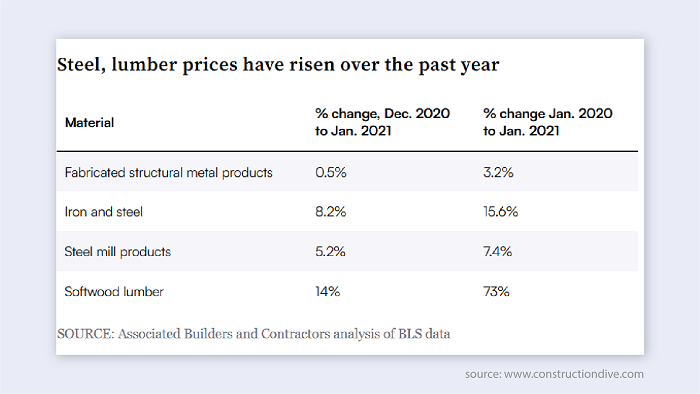
One of the challenging aspects in the future of construction is the rising costs of building materials. Key items like steel, timber, and concrete have become more expensive and harder to find. It often results in project delays which in turn soars the prices up.
Over the past two years, the cost of these materials has gone up by 3% to 73%, mainly due to disruptions in the global supply chain and a growing demand for construction materials.
Projects are stalling because construction companies can’t get the materials they need.
For example, shortages of concrete and steel are slowing down major infrastructure projects, especially in Europe and North America. This isn’t just about waiting a few extra weeks but resulting in significant cost overruns. When companies can’t get the materials on time, they end up paying more for labor and equipment, dragging out the completion date and inflating budgets.
And then, there are other couple of factors at work as well:
Geopolitical Tensions Affecting Supply
Political issues around the world are making things worse. Trade wars, like the recent tensions between Israel and Palestine, are disrupting global trade routes.
The global conflicts do interrupt the cement industry which makes procurement a challenge for the construction companies. Also, there are import restrictions in place on certain goods, which makes sourcing even more complicated.
The Answer: Innovative Supply Chain Solutions
Construction companies are seeking creative ways to address these issues. One major solution is using digital procurement platforms.
These platforms help companies track material availability in real-time that help avoid delays. Partnering with local suppliers this way can reduce their reliance on imports and cut down on the risk of supply chain disruptions.
Also, digitizing the supply chain with automation and AI-powered inventory tracking can make it easier to forecast demand and manage resources better.
Advanced Construction Materials
The construction industry is always looking for better materials to improve how buildings are made. Today, new materials are helping projects become stronger, more efficient, and even environmentally friendly.
As companies aim to build faster and with fewer resources, these advanced materials are shaping the future of construction.
Let’s take a look at some of the most exciting developments in this area: ultra-high-performance concrete (UHPC), self-healing concrete, and 3D printing.
Ultra-High-Performance Concrete (UHPC)
UHPC is a major improvement over regular concrete. It’s much stronger and can handle more stress, making it perfect for projects that need to last a long time, like bridges and tall buildings.
With UHPC, your construction can resist harsh weather and heavy loads without cracking or wearing down quickly. There is also less need for maintenance as it saves time and money over the lifespan of a structure. Perhaps the reason why cement plant manufacturers are adapting their processes to meet the growing demand for this super-strong material.
Self-Healing Concrete
This is a type of concrete that can fix itself upon cracks since it contains bacteria that activate when water seeps into cracks. It happens due to a self-producing substance that fills the gaps and repairs the damage.
While still a new technology, self-healing concrete holds a lot of promise for large-scale projects like roads and bridges. You’ll need a proven cement storage system manufacturer who can help store cement, such as self-healing concrete. It will help reduce the need for constant repairs, and self-healing concrete could help save millions in maintenance costs.
Investment in R&D for New Materials
Modern materials are gaining popularity. So, companies manufacturing it should be investing more in research and development (R&D) that help meet the growing demand.
The idea should be to find ways and make these materials even better, whether it’s improving the strength of UHPC or finding new ways to make self-healing concrete more effective. There’s also a big focus on making eco-friendly cement alternatives to help reduce the carbon footprint of construction projects.
More Focus on Health and Safety Protocols
Like everything else that shaped up during the pandemic, the construction industry has also made swift changes. Before, it was all about preventing accidents like falls or equipment mishaps. But now, there’s a bigger focus on keeping everyone healthy and preventing the spread of illness on-site.
A notable shift has been made in contactless operations. Now, workers no longer need to sign in with shared tools or paperwork. Instead, they use digital systems that let them check in without touching anything. The focus should be on reducing the spread of germs while also making it easier for supervisors to keep track of who’s on the site and ensure safety rules are being followed.
Wearable technology is also becoming more common in the construction industry, where the gadgets monitor things like heart rate and body temperature. It gives supervisors a heads-up if something seems off. This is also a simple way to catch health issues early and stop accidents before they happen.
Things like daily health checks, mask-wearing, and keeping a distance from others have become the norm. Even though the pandemic is winding down, many of these measures are likely to stick around, keeping job sites safer for everyone in the long run.
Conclusion
The changes we’ve seen in health and safety protocols on construction sites aren’t just temporary fixes—they’re shaping the future of how we approach worker safety. From contactless technology to wearable health devices, the tools and practices adopted during the pandemic have set a new standard. It’s not just about preventing accidents anymore; it’s about creating a healthier and safer environment for everyone involved by leveraging top cement plant consultancy services that can help you get started.
As these technologies and rules continue to evolve, companies that embrace them will not only protect their workers but also improve the way they operate. In the end, keeping safety at the forefront is good for both the people on the ground and the success of the projects they’re building.