The global cement market shows a solid upward trajectory. This is due to the heightened demand across critical sectors such as construction, infrastructure development, and urban expansion.
Fortune Business Insights anticipates the global cement market will reach $326.81 billion in 2022 and $603.56 billion by 2030.
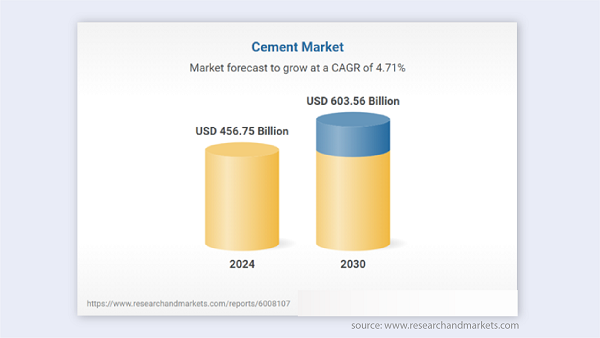
These numbers show that rapid growth is possible due to emerging economies, a wave of infrastructure investments, and an escalating need for residential and commercial development.
That said, it still poses possibilities and challenges for a top cement plant manufacturing company. They must remain competitive by adapting to the changing marketing market, optimizing production in this market, and exploring sustainable solutions to meet the growing demand.
Let’s explore the market’s evolution further to understand how shifts in demand, advancements in technology, and the growing focus on sustainability are shaping the industry’s future.
History of Cement Market
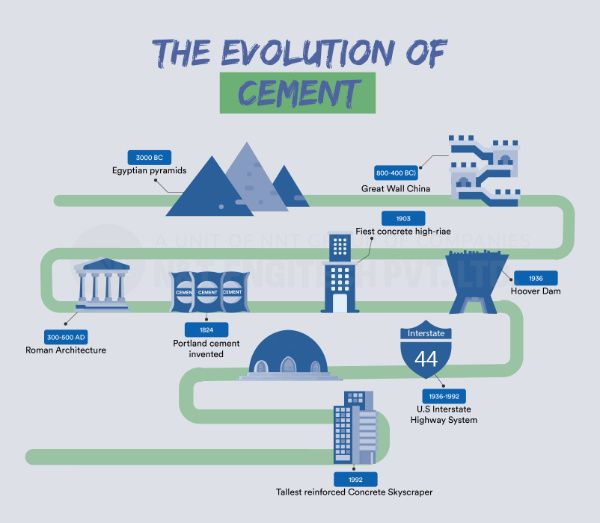
Fast-forward to 1824. Joseph Aspdin, an English bricklayer, transformed the way cement was made by patenting Portland cement. This process involved heating a blend of limestone and clay at high temperatures to create a stronger, more reliable cement.
This process led to the creation of clinker, which, when ground into a fine powder, became the foundation of modern cement production.
From that point till today, the cement market has expanded globally, covering everything from homes and office buildings to massive infrastructure projects.
Current Market Overview
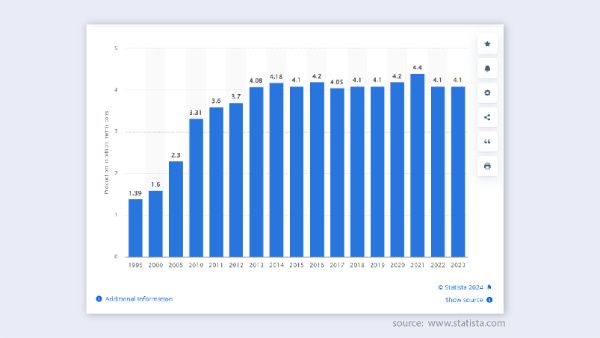
The global cement market is growing steadily due to the surge in construction activities worldwide. By 2023, cement production capacity reached 4.1 billion metric tons annually, underscoring just how vast this industry has become.
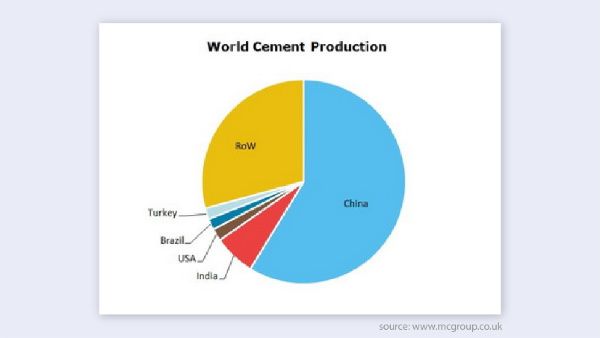
China remains the dominant force, producing over 2.3 billion metric tons annually—more than half of the world’s total output. India isn’t far behind, with over 300 million metric tons produced, as it keeps pace with the rapid demand brought on by urbanization and infrastructure expansion.
Interestingly, despite its own substantial production, the U.S. still depends heavily on imports to meet its cement needs.
In 2022, U.S. cement production hit around 100 million metric tons, yet the country continued to import large quantities, primarily from Canada and Mexico.
In June 2023 alone, U.S. cement imports totaled 2.5 million metric tons, illustrating just how interconnected the global cement market really is.
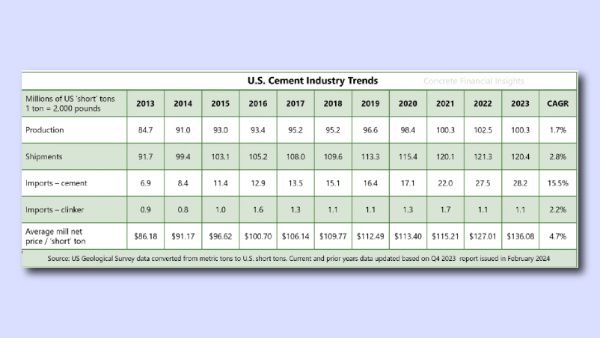
Despite this, the U.S. relies heavily on imports to meet its consumption demands, mainly from Canada and Mexico, as reported by IndexBox.
In June 2023 alone, US cement imports reached a notable 2.5 million metric tons.
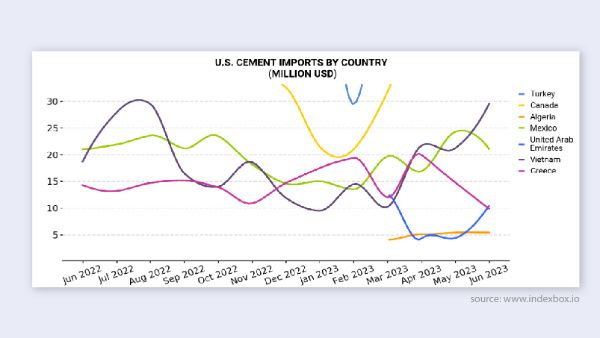
This reliance on international trade emphasizes the importance of cement in both local and global economies as countries work to meet their own growing infrastructure demands.
Regional nuances in understanding the cement market.
Asia-Pacific leads the global cement market size, accounting for an impressive 73.66% share in 2023, valued at around $300 billion.
This dominance is largely fueled by the rapid pace of construction and infrastructure projects in countries like China and India.
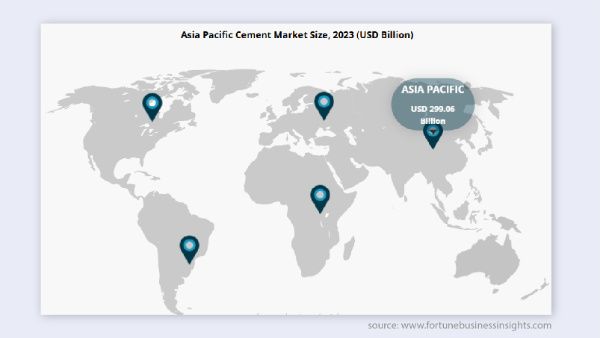
While Asia-Pacific is at the forefront, other regions are also experiencing growth, though at different rates. In North America, for example, cement demand is expected to rise steadily, thanks to continued investments in both residential and commercial construction.
To get a clearer picture of the market, it’s important to look at it by type, application, and specific sub-segments.
By Type:
The market includes different cement types
- Ordinary Portland Cement (OPC)
- Blended cement
- and masonry cement
While OPC continues to be the most widely used, blended cements are gaining popularity because of their improved properties and environmental advantages.
By Application: Cement is essential for a wide range of construction projects, including residential homes, commercial buildings, and major infrastructure developments.
Infrastructure projects like roads, bridges, and dams are key drivers of cement demand worldwide.
Sub-segmentation: There are also specialized types of cement, like white cement or rapid-hardening cement, which are used in specific construction projects where their unique properties are required.
Reasons for Market Expansion
The cement industry's growth isn't happening in a vacuum. Instead, it is deeply tied to the quick-paced urbanization and the expanding scale of infrastructure projects worldwide.
Cities are growing faster, and new development areas are gradually emerging, leading to a surge in the demand for cement.
Hence, keeping up with this demand requires cement manufacturers to increase production, adopt more sustainable practices, and shift gears to meet the fast-paced cement needs of the global market.
Urban Growth and Building Development
As cities expand and new urban areas emerge, the demand for cement in construction skyrockets. More homes, offices, and commercial spaces are needed to accommodate growing populations, and cement is at the heart of this development.
Think about the towering cityscapes emerging in developing economies and the ongoing construction boom in established urban centers. Cement is the backbone of these projects. Also, it is because the demand is highly linked to this global trend of urbanization.
Demand from Developing Countries
Developing nations are seeing unprecedented levels of construction, from large infrastructure projects to residential housing developments. Countries like India, Indonesia, and Brazil (BRICS) are investing heavily in roads, bridges, and other public infrastructure.
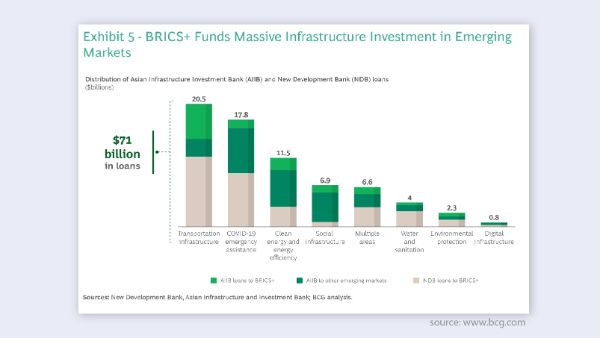
These countries are building new roads, bridges, airports, and housing to support their burgeoning populations and economies.
Government Programs and Rules & Affection on Cement Plant Manufacturers
The cement industry is focused on innovation and sustainability. Advances in production technology are leading to more efficient and environmentally friendly cement manufacturing processes. This also means top-quality mini cement manufacturing plants benefiting from government initiatives like infrastructure development programs and new regulations around sustainability to maximize their output.
While public spending on infrastructure boosts demand, stricter environmental regulations are pushing cement manufacturers to adapt their processes to be more eco-friendly. These innovations not only drive market expansion by offering better products but also address the growing global concern for environmental responsibility.
Improvements in Production Technology and Eco-Friendliness
Technology is also a great need in today’s cement industry since it helps cement plant manufacturers to remain more environmentally conscious.
Innovations in production processes, such as the use of alternative fuels, energy efficiency improvements, and the rise in the global green cement market which is helping manufacturers reduce their carbon footprint.
These innovations are driving market expansion by offering better products and addressing the growing global concern for environmental responsibility.
Hurdles in the Cement Market
Like any industry, even the cement industry faces its share of challenges.
The rising demand has manufacturers finding themselves navigating a market filled with obstacles that could easily affect profitability and growth.
Staying ahead amidst all these requires businesses to prepare for these issues and tackle them with strategic planning.
Let’s explore each in detail.
Shortage of Raw Materials and Price Fluctuations
Cement production depends heavily on raw materials like limestone, clay, and gypsum.
Availability of these essential resources is increasingly unpredictable. Environmental restrictions, mining regulations, and uneven geographic distribution make sourcing more complex than ever.
Also, the prices for raw materials and energy are all over the map, leaving manufacturers in a tight spot. These shortages, combined with volatile pricing, force manufacturers to adjust quickly. In many cases, these rising costs ripple down the supply chain, causing market instability and potential price increases for consumers.
Competition from Alternative Materials
Cement isn’t the only option. Construction is evolving, and materials like fly ash, slag, and other alternatives are gaining traction.
These materials tend to be greener and often come with a smaller price tag, creating real competition for traditional cement products.
For cement manufacturers, it’s no longer just about producing more—it’s about producing smarter. Innovation is key. Companies need to think outside the box to stand out in a market that’s increasingly leaning toward sustainable alternatives.
Effects of Global Economic Changes
Cement production is closely tied to the global economy. When the economy dips, so does construction, and with it, the demand for cement.
Geopolitical tensions and global wars have a rippling effect on the cement industry.
Trade issues and fluctuating currency values can all affect how much cement is needed and where it’s produced.
Having contingency plans in place can help cushion the impact of sudden economic downturns or regional instability.
Environmental Regulations and Sustainability Challenges
Cement manufacturing is one of the most carbon-heavy industries out there, and that’s catching the attention of regulators.
Governments are tightening restrictions, pushing for reduced carbon emissions and cleaner production methods. This pressure forces manufacturers to invest in new technologies and greener processes to stay compliant.
The shift towards eco-friendly production is necessary, but it comes at a cost.
Adapting to these stricter environmental rules requires heavy financial investments and a rethink of traditional manufacturing techniques.
For companies that don’t keep up, the penalties can be steep—not just financially but in terms of lost market share.
Future Cement Industry Trends and Predictions
The cement industry is on the cusp of a transformation driven by technological advancements, sustainability concerns, and evolving market dynamics. Understanding the trends in the construction industry allows manufacturers to adjust their strategies today, ensuring long-term success.
Market Growth Predictions for Cement
The global cement market is on a promising growth trajectory since it was valued at $326.81 billion in 2022. And the same is expected to grow at a compound annual growth rate (CAGR) of 1.1%, reaching approximately $481.73 billion by 2029.
While markets like North America are predicted to grow steadily, the emerging economies in Asia Pacific and Africa are expected to see the most robust expansion. These regions are experiencing rapid urbanization and increased infrastructure development, which will continue to fuel cement demand.
New Ideas in Cement Making and Materials
The future of cement production is no longer about just making more—it’s about making it brighter. Innovation is reshaping both the process and the materials. As sustainability becomes a bigger priority, manufacturers are starting to rethink their dependence on traditional resources like limestone.
For example, there’s growing interest in alternative binding materials that reduce reliance on traditional raw materials like limestone.
Some of the key trends in this area include:
- Blended cement: Combining Portland cement with supplementary cementitious materials like fly ash and slag to enhance properties and reduce environmental impact.
- Alternative fuels: Utilizing waste materials, biomass, and other alternative fuels to reduce reliance on fossil fuels and lower carbon emissions.
- Nanotechnology: Incorporating nanoparticles to improve cement's strength, durability, and resistance to cracking.
Move Towards Eco-Friendly Practices (e.g., Green Cement)
Sustainability isn’t a buzzword for the cement industry anymore—it’s becoming a necessity. The drive toward greener building practices, coupled with increasingly strict environmental regulations, is pushing cement manufacturers to find eco-friendly solutions.
One major development is green cement. This type of cement is produced in a way that significantly reduces carbon emissions compared to traditional methods. It’s a viable alternative, and as governments around the world set stricter environmental policies, those who embrace these changes will gain a competitive edge.
It’s not just about cutting emissions—it’s about future-proofing businesses. Companies that meet sustainability requirements will find new opportunities in the growing green construction market, making them leaders in a fast-evolving business environment.
Effects of Technology and Smart Manufacturing
Technology is revolutionizing how cement is made in a factory. Smart manufacturing, powered by automation, artificial intelligence, and cement market analysis, is helping companies improve efficiency, cut waste, and keep costs down.
Predictive maintenance systems are a game changer, allowing manufacturers to monitor their equipment in real-time and fix problems before they turn into expensive breakdowns.
Meanwhile, 3D printing is making waves in construction, enabling rapid construction using cement-based materials.
This isn’t just faster—it’s more cost-effective, cutting down on labor and material waste while speeding up the entire process.
Conclusion
As the cement industry continues to change, with technology advancements and a growing emphasis on sustainability, it’s essential to have the right partners by your side.
Working with experienced cement plant consultancy services can help tap into their deep expertise and proven solutions. Ultimately, it results in streamlined cement production that prepares you to face the growing competition in this market.
If you’re looking to improve efficiency, cut costs, or embrace more sustainable practices, now’s the time to connect with the experts.
Let our experience guide you toward optimal production and position your business for success in the years ahead.